Boris Zingarevich’s net worth over time
Only dates with a published estimate are shown. Nothing is filled in between. Tap or hover a bar to see the source.
See the numbers as a table
| Date | Estimate | Source |
| 2019 | $1 billion | Forbes World's Billionaires List 2019 |
| 2020 | $1.2 billion | Forbes World's Billionaires List 2020 |
| 2021 | $1.1 billion | Forbes World's Billionaires List 2021 |
| 2023 | $1.4 billion | Forbes World's Billionaires List 2023 |
| 2024 | $2.1 billion | Forbes World's Billionaires List 2024 |
| 2025 | $2.1 billion | Forbes World's Billionaires List 2025 |
| 2026 | $1.9 billion | Forbes World's Billionaires List 2026 |
| Oct 2026 | $1.9 billion | Forbes Real-Time Billionaires · Forbes real-time estimate |
Where the money comes from
These are the main sources of wealth named in the reporting we cite. No published source breaks the total into exact amounts, so we do not show percentages.
Boris Zingarevich’s fortune in real-life terms
Based on the Forbes Real-Time Billionaires estimate above. Median full-time U.S. pay is $65,416 a year ($1,258 a week, BLS, Q2 2026), before taxes. Typical (median) U.S. family net worth is $216,100 (Federal Reserve, 2025 Survey of Consumer Finances).
How do you compare to Boris Zingarevich? New
Type your yearly income and see how you stack up. It runs in your browser: nothing you type is saved or sent anywhere.
Boris Zingarevich has an estimated net worth of $1.9 billion, according to Forbes Real-Time Billionaires, Boris Zingarevich profile (figures as of October 20, 2026). That is up from $1 billion in 2019.
Boris Zingarevich is a Russian entrepreneur and investor who made his fortune in pulp, paper and timber. He was born on July 8, 1959, in the town of Sebezh in the Pskov region of the USSR, to a family of teachers. He has a twin brother, Mikhail Zingarevich, who became one of his business partners.
He graduated from the Pulp and Paper Technological University in Leningrad with a diploma in engineering, and he worked his way up in the pulp and paper industry to the position of chief engineer before starting his own business.
Beyond forestry, Zingarevich has invested in energy storage. In the early 2000s he made startup investments in Ener1, a company that develops energy storage technology and makes lithium-ion batteries for transportation, power grids and industrial electronics. He also invested in the Think Global electric car project.
How Boris Zingarevich made his money
In the early 1990s Zingarevich and his university schoolmate Zakhar Smushkin got involved in barter trading with Russian pulp and paper mills. In 1992 he founded Ilim Pulp Enterprise with his brother Mikhail and Smushkin, and he was in charge of operations and development projects as a board member. Later in the decade, during Russia's privatization, the partners bought their first plant, the Kotlas pulp and paper mill. Ilim grew into the largest vertically integrated timber company in Russia.
In 2007 the partners formed a joint venture with International Paper, which bought 50% of Ilim for about $650 million, most of it in cash. The same year Zingarevich set up Ilim Timber from wood processing assets that were not part of the venture. In 2023 International Paper sold its 50% back to the Russian partners. He still controls Ilim Timber, a large processed timber firm.
How Forbes has valued Boris Zingarevich
Forbes put Zingarevich's net worth at $1 billion in 2019. It was $1.2 billion in 2020 and $1.1 billion in 2021. He then returned at $1.4 billion in 2023.
After the partners bought back full control of Ilim, his figure rose to $2.1 billion in 2024 and stayed at $2.1 billion in 2025. On the 2026 World's Billionaires List he was valued at $1.9 billion, which matched the Forbes real-time billionaires tracker as of October 20, 2026.
Career and money timeline
- 1959
Born in Sebezh, Pskov region.
- 1992
Co-founded Ilim Pulp Enterprise.
- 2007
Formed the Ilim joint venture with International Paper and set up Ilim Timber.
- 2023
International Paper sold its Ilim stake to the Russian partners.
- 2024
Forbes valued him at $2.1 billion.
Boris Zingarevich net worth FAQ
What is Boris Zingarevich's net worth?
Boris Zingarevich's net worth is an estimated $1.9 billion, according to Forbes Real-Time Billionaires, Boris Zingarevich profile (October 20, 2026). It is an estimate, not an official figure.
How did Boris Zingarevich get so rich?
The main sources named in the reporting we cite are: Pulp and paper, diversified.
Is Boris Zingarevich a billionaire?
Yes. Forbes Real-Time Billionaires estimates Boris Zingarevich is worth $1.9 billion.
How has Boris Zingarevich's net worth changed?
The earliest published estimate we track is $1 billion (2019, Forbes World's Billionaires List 2019). The latest is $1.9 billion (October 20, 2026).
What is Ilim Group?
Ilim Group is a major Russian pulp and paper company that Boris Zingarevich co-founded in 1992. It was a joint venture with International Paper until 2023.
Sources
- Forbes Real-Time Billionaires, Boris Zingarevich profile (October 20, 2026)
- Forbes World's Billionaires List 2019, Boris Zingarevich profile (March 5, 2019)
- Forbes World's Billionaires List 2020, Boris Zingarevich profile (April 7, 2020)
- Forbes World's Billionaires List 2021, Boris Zingarevich profile (April 6, 2021)
- Forbes World's Billionaires List 2023, Boris Zingarevich profile (April 4, 2023)
- Forbes World's Billionaires List 2024, Boris Zingarevich profile (April 2, 2024)
- Forbes World's Billionaires List 2025, Boris Zingarevich profile (April 2025)
- Forbes World's Billionaires List 2026, Boris Zingarevich profile (March 10, 2026)
- U.S. Bureau of Labor Statistics, Usual Weekly Earnings (Q2 2026) (July 2026)
- Federal Reserve, 2025 Survey of Consumer Finances (median family net worth, Table 4) (October 2026)
- Background facts: Wikipedia, Boris Zingarevich (accessed October 30, 2026). Used for career facts only, never for figures.
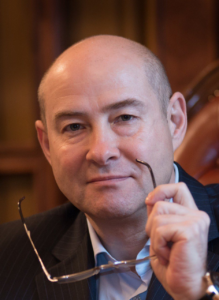
Photo: Sokrat78, CC BY-SA 4.0, via Wikimedia Commons.
Every number on this page is an estimate published by the source named next to it. We never fill in years with our own guesses. How we handle estimates.